How to Escape The Ditch Hotel
Clear the door goal, manage stamina, and reach the stairs alive.
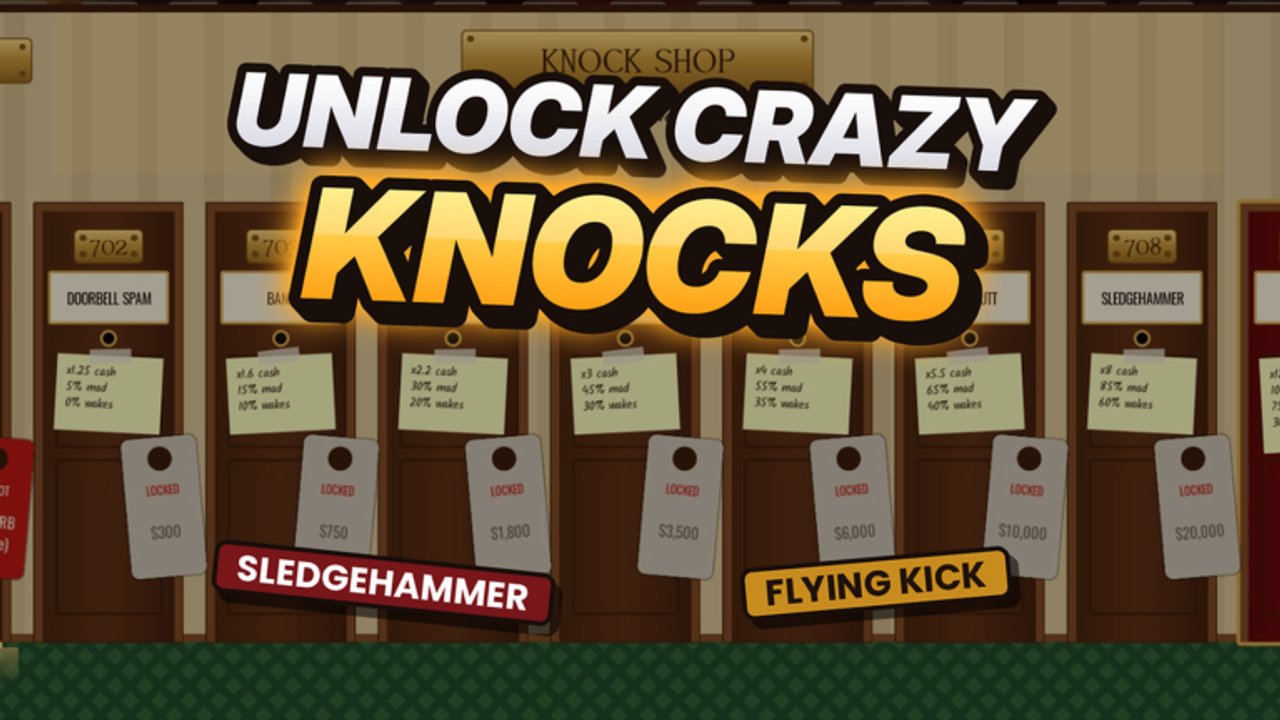
Escaping is the win condition in The Ditch Hotel. Knocking for Cash is only half the fantasy—if you never hit the door goal and leave down the stairs, the run does not count as an escape on the leaderboards. This guide focuses on goal awareness, stair routing, stamina budgeting, and difficulty-specific tips from Hard through IMPOSSIBLE. Pair it with Getting Started if you are still learning the basic loop, and with How to Hide for locker timing during the final chase.
Door goals decide the length of the run
Every difficulty asks you to complete a set number of successful door knocks before escape becomes available. Treat the goal meter as your primary HUD. Count progress after each safe knock. When you are two or three doors from finishing, stop exploring new wings and rotate only among doors that sit near known lockers and a clear path to stairs.
Greedy players keep knocking after the goal completes because Cash feels good. That habit is the top reason beginners die on Easy and the top reason veterans throw Hard clears. Once the goal lights up as complete, your only job is leaving. Extra knocks are optional only if the path to stairs is already safe and a door sits on the way—never detour into a dead hallway for one more payout.
Map choice changes how door goals feel. On the Hotel, corridors are linear and stairs are easier to memorize. On Neighborhood, party houses tempt you with five-times Cash while dragging an entire party into the chase—great for farming, terrible when you only need one more normal door. On Ditchwood Middle School, three floors and TEST IN PROGRESS double-cash rooms can pull you upstairs when stairs down are what you actually need. Read Maps before you raise difficulty on School or Neighborhood.
Stairs are a route, not a hope
Before you start a run, identify where stairs sit relative to the densest locker clusters. During the mid-game, occasionally path past stairs so the route stays fresh in your head. When the door goal completes, commit to that route immediately. Do not invent a new path under chase pressure.
On multi-floor School maps, decide early whether you will finish the goal on the floor closest to exit or accept a controlled descent under threat. Loud play can summon PRINCIPAL; if you are one door from freedom, prefer quiet knocks and short sprints over noisy Knock Shop styles. Hotel classics like Grandma or BIG EARL still punish hallway camping—clear corners with camera flicks before you commit to a long stair sprint.
If a friend is in the elevator party, call the stair side out loud. Shared knock Cash is nice, but shared information wins escapes. Details on co-op etiquette live in Play with Friends.
Stamina budgeting for the exit
Stamina is the hidden escape resource. Waste it weaving through empty halls and you will arrive at stairs with an empty bar while a chaser closes. Upgrade Stamina toward Level 10 as Cash allows, and consider Gift Shop 2x Stamina when you push Hard or higher. 2x Speed helps rotate doors, but stamina depth matters more when the final chase begins.
Practical rules:
- Walk or jog between safe doors when no chaser is near—save sprint for breaks in line of sight.
- After a hide, wait a beat before dumping the full sprint bar; confirm the chaser moved on.
- Keep enough stamina in reserve to reach the next linen locker or the stairs, whichever is your planned fail-safe.
- Do not jump-spam or panic strafe in open atriums; straight lines to cover beat stylish movement.
Money upgrades and How to Get Cash routes fund these stamina investments faster. Codes from the Codes hub accelerate the same progression on day one.
Hiding on the way out
Escapes die in the last thirty seconds when players refuse to hide. If a chaser owns the stair hallway, take a locker, hold breath, and reset the chase rather than forcing a doomed sprint. Closet Hide upgrades and Gift Shop 2x Closet Hide buy you longer safe windows. Leave the locker only when audio fades and your exit lane is clear. If the chaser camps, path to a second locker that reconnects to stairs—do not exit into their face.
Hard difficulty tips
Hard raises pressure without fully removing beginner forgiveness. Prioritize:
- Finish door goals in locker-dense wings.
- Avoid Neighborhood party houses unless you specifically need a Cash spike and your team is ready for a group chase.
- Keep one Revive in reserve for learning new stair routes; do not spend every Revive on greed deaths.
- Ban post-goal knocks unless the door is literally on the stair path.
Study the Tier List so high-threat chasers and weak knock styles do not surprise you mid-run.
Difficult difficulty tips
Difficult punishes messy routes. Pre-plan a door circuit that ends near stairs. Use quieter knock styles when you are close to the goal on School. Watch noise response: SECURITY / POLICE and PRINCIPAL turn loud jokes into run-enders. Farm double-cash TEST IN PROGRESS rooms early in the run, not after the goal is nearly done. If your Closet Hide and Stamina upgrades lag, drop back to Hard for a few funded clears before retrying.
IMPOSSIBLE difficulty tips
IMPOSSIBLE is a precision mode. Enter only when Difficult escapes are consistent. Expectations:
- Near-perfect stamina discipline and locker pre-aims before every knock.
- Minimal experimental Knock Shop usage mid-run; stick to styles you can time under stress.
- Strong map knowledge—especially School floor transitions and Hotel stair approaches.
- Gift Shop doubles (2x Stamina, 2x Closet Hide, optionally 2x Speed) when available; 2x Money helps the prep grind beforehand.
- Party play only with teammates who also know callouts; random loud friends will throw IMPOSSIBLE clears.
Leaderboards for Most Escapes per mode reward this discipline. Treat each IMPOSSIBLE attempt as a rehearsal of habits from Tips and Tricks, not a coin flip.
Escape checklist (print this mentally)
- Codes redeemed and key upgrades purchased before the lobby.
- Difficulty matched to your current consistency.
- Map chosen with stairs and lockers memorized.
- Door goal tracked; circuit ends near exit.
- Stamina reserved for the final hallway.
- Locker fail-safe identified on the stair route.
- No post-goal greed unless the knock is on the way out.
- If playing with friends, elevator party agrees on when to stop farming.
Common escape failures
Death after goal complete — You kept knocking. Fix: hard rule to path stairs immediately. Empty stamina at stairs — You sprinted every rotation. Fix: walk safe segments. Wrong floor on School — You chased double cash upstairs too late. Fix: finish goal near exit floor. Party house wipe on Neighborhood — You wanted five-times Cash with one door left. Fix: normal doors only near the end. Camper on stairs — You refused to hide. Fix: locker reset, then second approach.
Master these patterns and escapes stop feeling lucky. Cash guides make the prep faster; hide guides make the last hallway calmer; maps make routing automatic. Use this page as the spine of your difficulty climb in The Ditch Hotel.
Frequently Asked Questions
Quick answers about codes, knocks, lockers, and escapes in The Ditch Hotel.
When should I stop knocking and escape?
The moment your door goal completes. Only knock again if a door sits directly on your path to the stairs and the route is already safe.
How do I manage stamina for escapes?
Walk safe segments, save sprint for breaking line of sight, keep enough bar to reach a locker or the stairs, and upgrade Stamina or buy 2x Stamina for Hard+.
What is different on IMPOSSIBLE?
You need consistent Difficult clears first, near-perfect locker pre-aims, disciplined stamina, and usually Gift Shop doubles—treat it as precision, not a rush.
Which map is best for learning escapes?
Hotel is the clearest for stair memory. Learn Neighborhood party-house risk and School multi-floor routes after Easy Hotel escapes feel routine.
Do escapes count on leaderboards?
Yes. Leaderboards track Most Escapes per mode, so finishing the stairs on your chosen difficulty matters for competitive ranking.